Health blog Category: Shoulder Pain
Shoulder Tendonitis Defined

Shoulder tendonitis is a very common problem for every age group and one we treat often at Loudoun Sports Therapy Center. Tendonitis is inflammation of the tendon that attaches the muscle to the bone. With respect to the shoulder, the muscles that are most frequently inflamed are your rotator cuff and bicep tendon. Our patients will typically complain about pain along the front of the shoulder. Patients often complaint of pain with overhead activities, lifting items, reaching behind their back or pain when washing their hair.
Read full blogWhich Muscles Stabilize Our Shoulders?

The rotator cuff is a group of muscles that help stabilize our shoulder within it’s socket as we do overhead movements. There are four muscles that make up the rotator cuff, each muscle has a different action and all must be equally strong and flexible in order to avoid a number of different shoulder injuries.
Those muscles are:
- Supraspinatus
- Infraspinatus
- Teres minor
- Subscapularis
Shoulder Injuries
Rotator cuff strains are common in professions that require a lot of repetitive overhead movements and are common in sport athletes who participate in overhead motions for example:
- baseball
- tennis
- basketball.
Frozen Shoulder

Frozen shoulder, also known as adhesive capsulitis, is a condition in the shoulder that causes the capsule that surrounds the shoulder joint to become inflamed and freeze up causing pain and loss of mobility.

What Causes Frozen Shoulder?
- Inflammation to the joint capsule or surrounding soft tissue structures
- Injury or trauma causing lack of movement of the joint
- Random onset
What are the symptoms of frozen shoulder?
Read full blog3 Most Common Shoulder Injuries

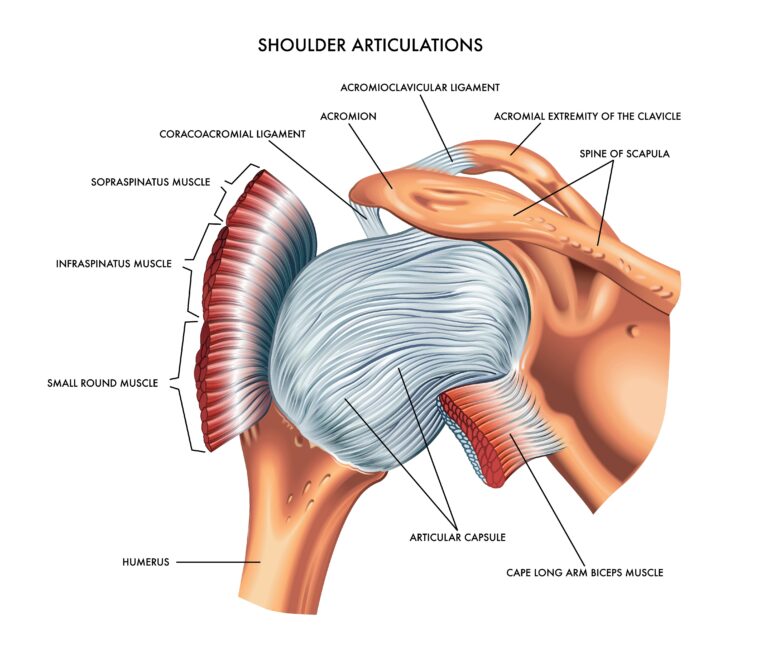
Shoulder pain and weakness are some of the most common reasons people seek help from a medical professional. The design of the shoulder as a ball and socket joint whereas the rounded head of the humerus articulates with the cup-like depression of the scapula giving it a wide degree of movement is why the shoulder is so commonly injured. This joint is held together by an extensive group of muscles and ligaments that can be weakened by certain types of repetitive forces.
Read full blogRotator Cuff Injuries in Baseball Players

Rotator cuff tears are a common baseball injury, especially for pitchers. Your rotator cuff keeps your arm in its socket. It’s made up of a group of four muscles that combine as a tendon to help rotate and move your arm. This is why pitchers often fall victim to this injury.
TWO TYPES OF TEARS:
- Partial
- Full-Thickness
A tear happens when one or more of your tendons tears and becomes either fully or partially detached from the upper arm bone, called the humerus.
Read full blogTreatment for Shoulder Pain

Are you suffering with shoulder pain, stiffness, or decreased function? Shoulder pain can develop for a number of reasons including:
- traumatic injury
- overuse
- postural deficits
- weakness
If left untreated, intermittent or nagging shoulder pain can develop into a significant condition which can limit your ability to participate in activities of daily living (ADLs), work duties, leisure activities, or sports.
This is where physical therapy can help.
Read full blogSubacromial Pain Syndrome

Subacromial Pain Syndrome is the preferred alternate physical therapy diagnosis for “Shoulder Impingement.” It was previously believed that structural differences and a loss of space between joint surfaces was the cause of shoulder pain located towards the front/side of the shoulder in absence of known tears in the rotator cuff (group of muscles that hold your shoulder in the socket) or glenoid labrum (a cup that increases coverage over the shoulder bone). Thanks to Evidence Based Medicine, we now know that the experience of shoulder pain isn’t so closely related to the shape of your bones, which is great news. Bone shapes don’t change easily.
What is Subacromial pain syndrome:
It is pain located in the front or to the side of your shoulder and often a precursor for rotator cuff pathology (strains or tears of the rotator cuff muscle at the point of attachment around the front and side of your shoulder).
Read full blogRotator Cuff Trouble

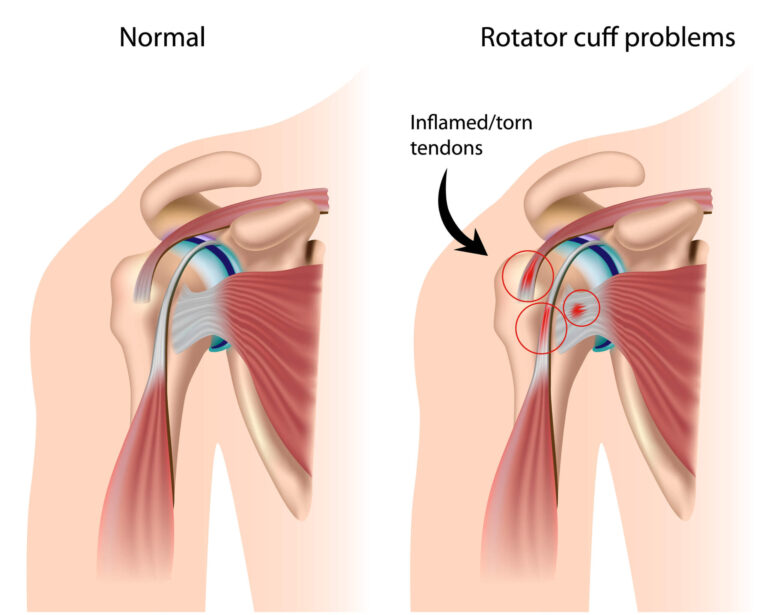
An irritated shoulder with certain motions or when we sleep, is a sign our rotator cuff could be giving us trouble.
Strength and stability of the rotator cuff is needed to relieve that pain or irritation and to help us complete all of our daily activities such as:
- Brushing our hair
- Brushing our teeth
- Lifting objects overhead
- Throwing a baseball
Rotator Cuff Anatomy
The rotator cuff is the group of four muscles that surround your shoulder joint, guiding and controlling the way your shoulder moves.
Read full blogShoulder Fractures

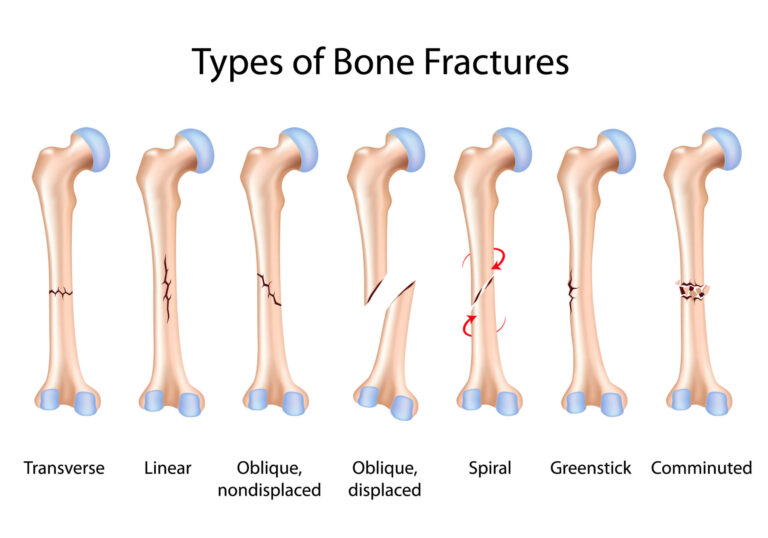
Fractures at the top part of the shoulder are very common.
The risk of fracturing the shoulder increases with age for various reasons:
- Increase in balance issues with age
- More common to have osteoporosis
- Lack of physical activity leading to weaker muscles in the winter
- Increased number of people over the age of 65 with osteoporosis
How do the above lead to more fractures?
The more inactive you are, the weaker your muscles become because of disuse. When your muscles are weak, your balance becomes affected which increases your risk of falling. Then there is osteoporosis. Osteoporosis involves a decrease in new bone formation while the body is continuing to break down bone. This results in more brittle bones and a more increased risk of fracture when a fall occurs.
How do you know that you may have a shoulder fracture?
Read full blogShoulder Dislocations

What is a shoulder dislocation?
The shoulder joint is called a ball-and-socket joint. The ball is the rounded top of the bone in the upper arm (humerus), which fits into the socket — the cup-shaped outer part of the shoulder blade. When the top of the humerus moves out of its usual location in the shoulder joint, the shoulder is said to be dislocated. A related injury called a shoulder subluxation occurs when the top of the humerus is only partially displaced and not totally out of its socket.
Read full blog